

Quantifying the Amber Revolution: How Big is Orange Wine?
Niche, anti-establishment phenomenon in big progressive cities or wine category on par with white, red and rosé? The reality lies somewhere between these extremes.

It’s King’s Day in the Netherlands and orange is everywhere. This not only applies to shirts, flags and decorations, but also to wine. With a very lively natural wine scene including orange wine evangelist Simon J. Woolf and plenty of Gen Z hipsters roaming the canals, it feels like orange wine has staged a coup and is the new pretender to the throne of the wine world. Internationally, the wine press has written about the orange wine trend for the last 10 years. And this year even the notoriously conservative WSET put orange wine in the spotlight by making it a topic for the D6 individual research assignment.
But step outside the hipster-dense Ring of Amsterdam or the natural wine enclaves of East London and Berlin Kreuzberg and the narrative shifts. In the provinces and in more traditional restaurants, orange wine is still a ghost. And when speaking to the old guard of wine professionals, orange wine is quickly dismissed as something flawed and cider-like that no serious wine lover would actually enjoy.
This made me curious: how big is orange wine these days? Information on wine sales in general and orange wine in particular is notoriously scarce so it wasn’t easy to find actual data that support or refute the “big trend” and “orange is the new rosé” story line. Time to get creative and come up with some measures to quantify the amber revolution.
A decade of steep growth
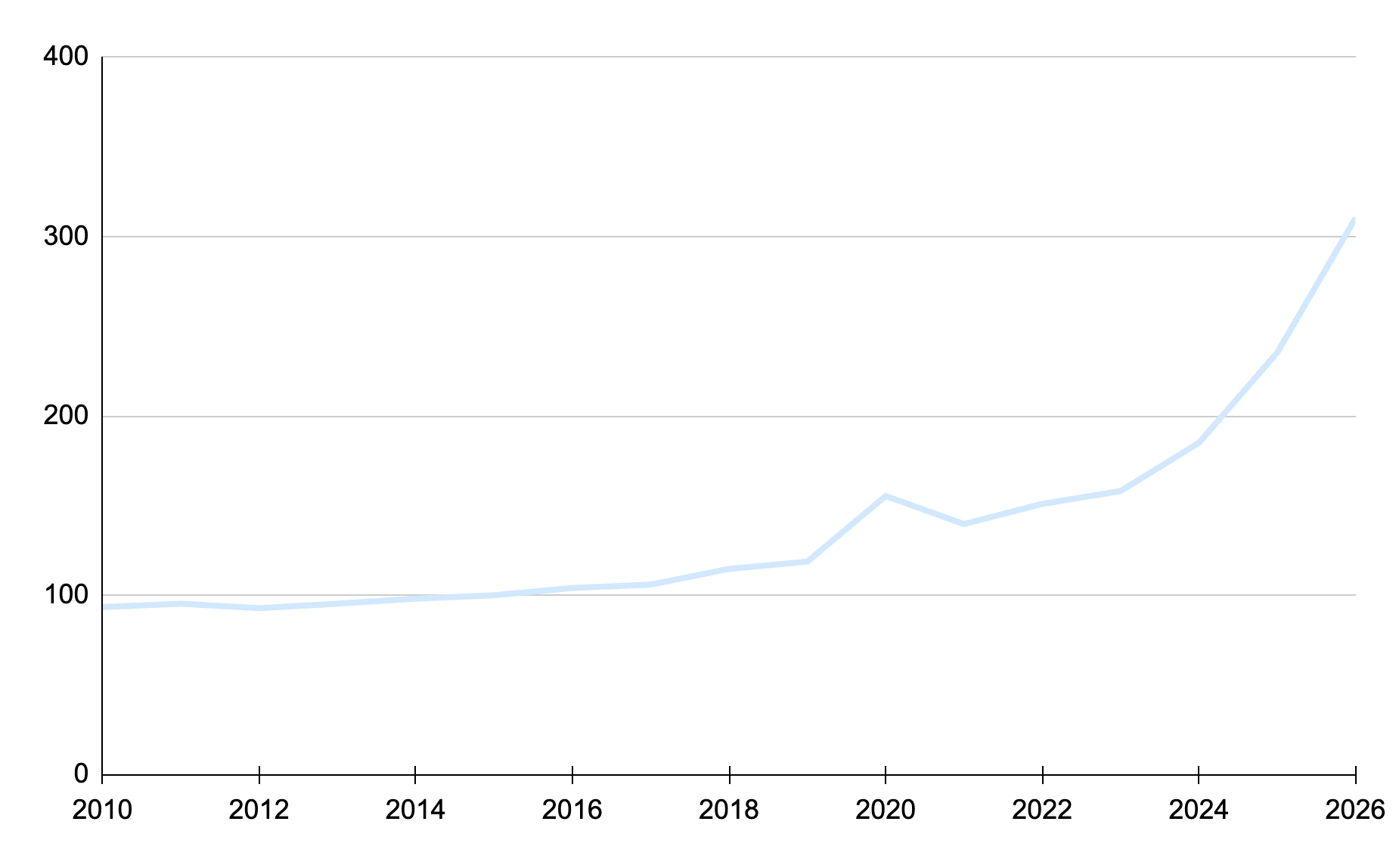
The first idea to measure peoples’ interest in orange wine is to look at Google Trends. The data shows that search interest in 2026 is about three times higher than it was in 2015. Quite a large increase but maybe less than I expected based on the orange craze in Amsterdam. Google trend data has some limitations (see, for example, Hölzl et al, 2025), so let’s dig deeper.
As an avid user of CellarTracker, I thought I’ll check the number of orange wines on the platform. CellarTracker tends to be used by fine-wine collectors who write tasting notes and keep track of the bottles in their cellars. Not a demographic I would immediately associate with orange wine, but let’s find out.
To see how the orange wine category has grown over time, I use the advance search functionality of CellarTracker to find the number of orange wines for each vintage since 2010.1 Again there is a steep increase, maybe this time a bit earlier than indicated by Google Trends and somewhat slowing in recent years. But the magnitude of the increase is similar with 3.7 times more different orange wines in 2022 than in 2015 (Note that numbers in more recent vintages may be incomplete because not all wines have been released or logged by the users yet.)
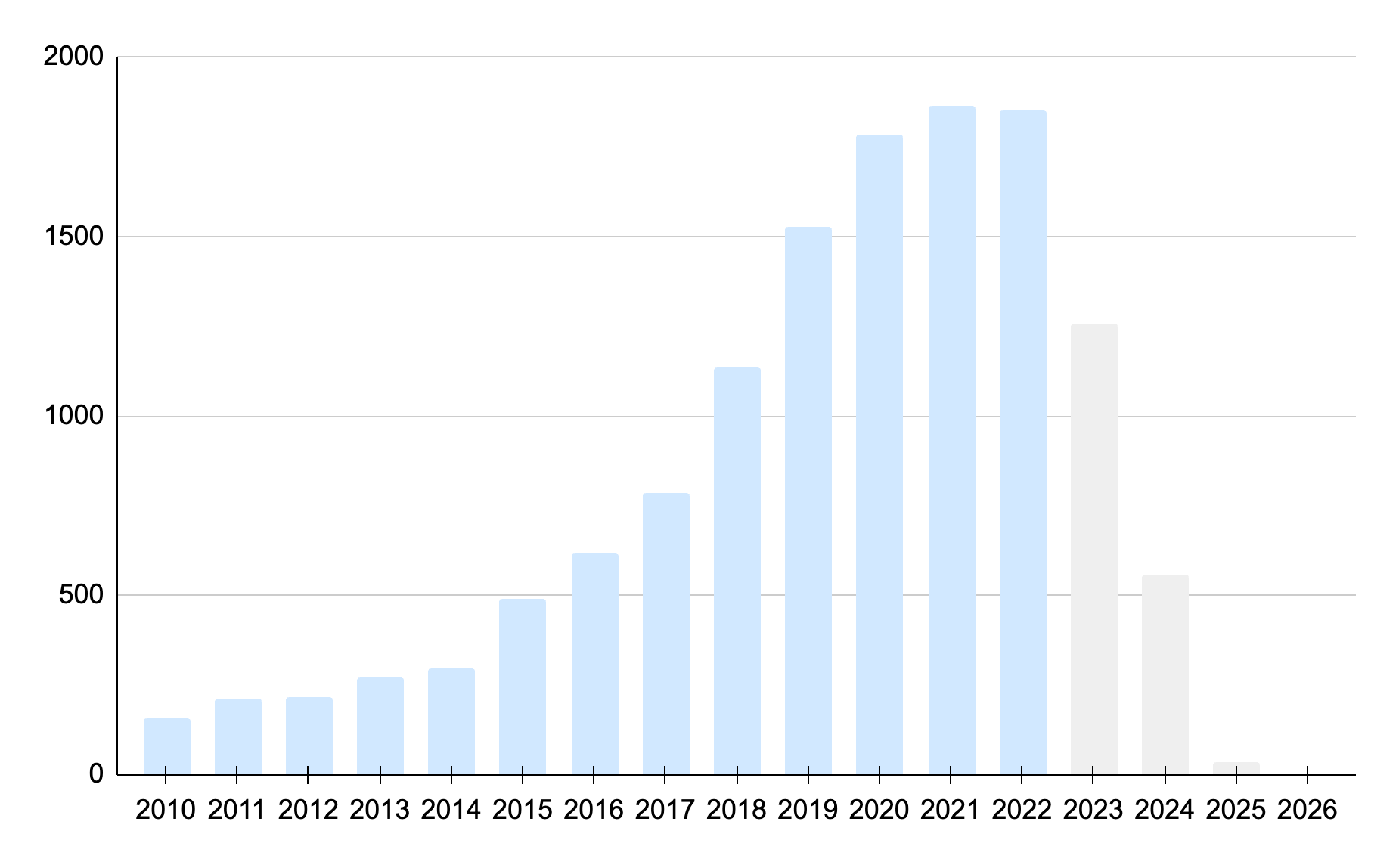
While the growth in search interest was lower than expected, the increase here is more than I initially thought it would be. When even the traditionalist CellarTracker crowd is logging more and more orange wine, this is definitely evidence for significant growth that goes beyond the hipster bars.
Orange wine production going global
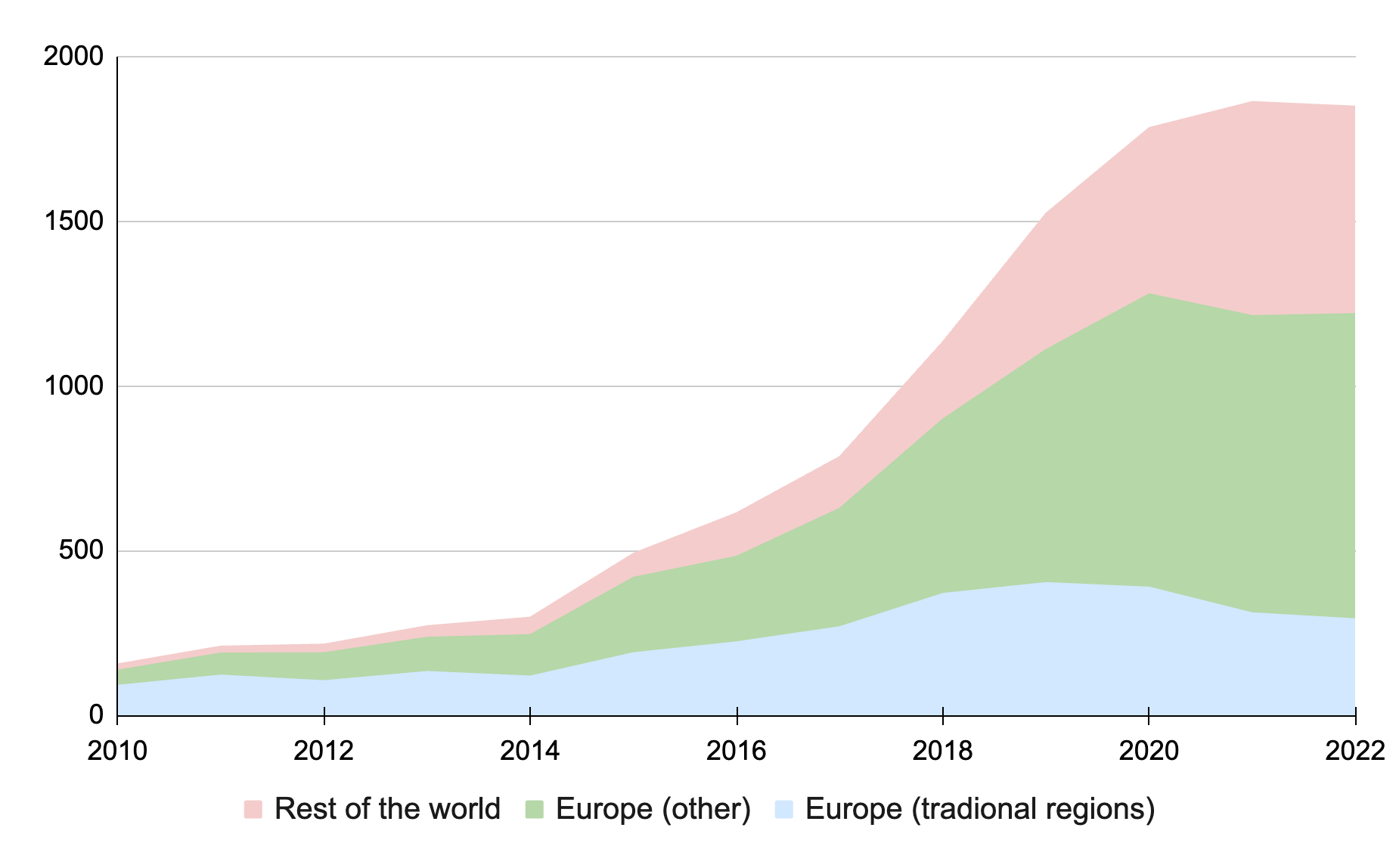
Let’s try to understand a bit better where this growth comes from. In the early 2010s, most orange wines were produced in the traditional regions of Friuli-Venezia Giulia and Eastern Europe. While the number of wines from these regions has grown, the increase was moderate and can only explain a small part of the overall rise in the category.
Most of the increase in the number of orange wines actually comes from outside the traditional regions — the amber revolution has gone global. From 2014 to 2018 orange wines from other European regions started to grow heavily, later followed by the rest of the world. Nowadays, orange wine is produced on all continents in over 50 countries worldwide from Armenia to Canada and Peru to Japan. And it’s not Eastern Europe but the usual suspects of Italy, France and the USA who produce most wines.
Still a small niche
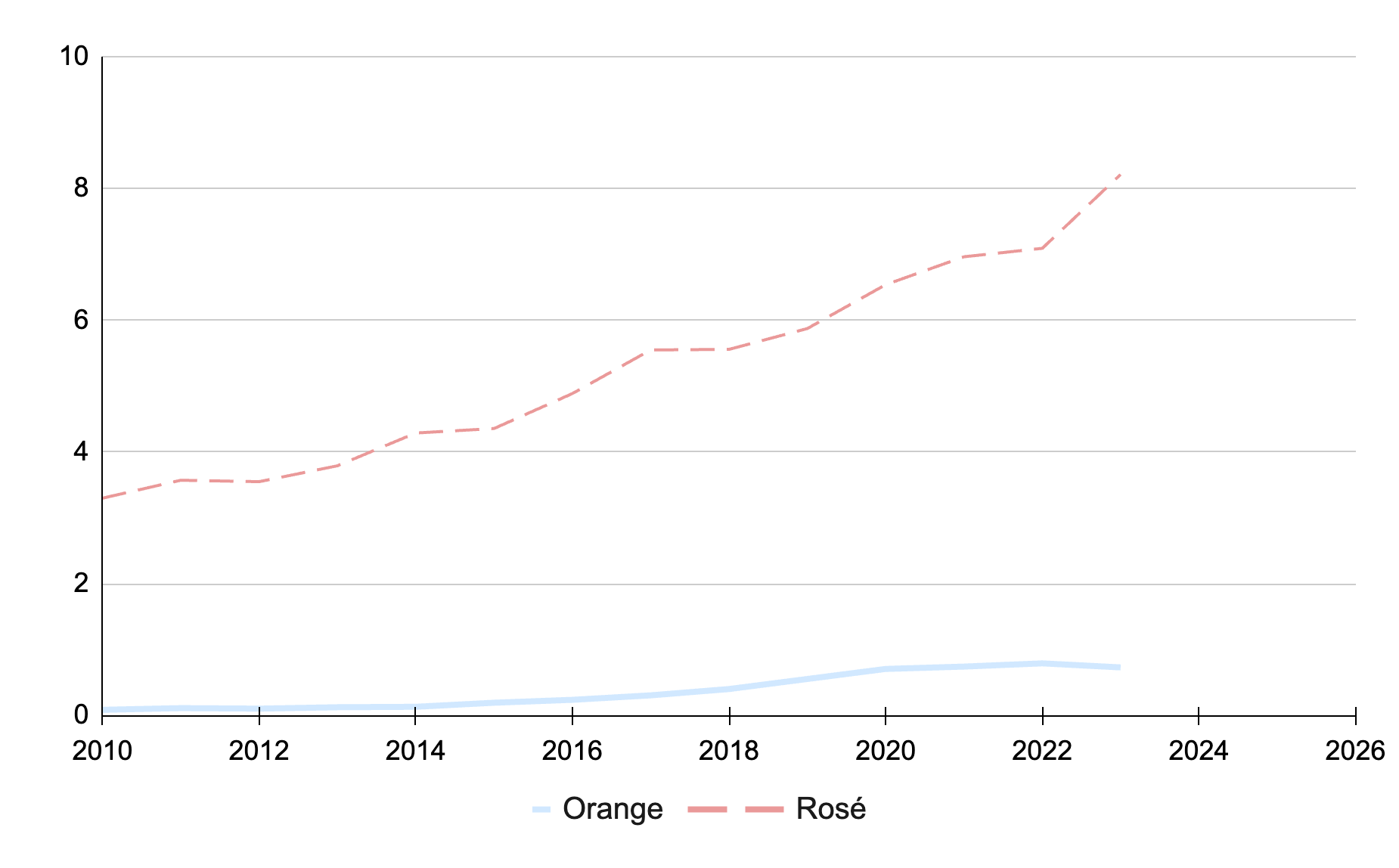
While there clearly seems to be growth, this doesn’t mean orange wine is big. Let’s put the numbers into perspective. There are millions of wines on CellarTracker and only less than 1% of them are orange.
While the share has increased from a tiny 0.2% in 2015 to a slightly less tiny 0.7% in more recent vintages, the overall market share remains very small. In comparison, rosé is about 10x as large and continues to grow at an even faster pace than orange wine.
Looking outside the Cellartracker fine wine bubble, there is more evidence that the orange wine remains niche. Since 2021 orange wine has a category in the Decanter World Wine Awards and all submissions are listed on their website. In the first year, a mere 25 orange wines were submitted. This has quadrupled to 108 in 2024 (before falling again to 84 in 2025), but with around 14,000 submissions every year, the share is again tiny. Interestingly, the share fully aligns with what I found on CellarTracker, ranging from 0.17% in 2021 to 0.71% in 2024. Rosé is again around 10-times as large, making up between 5.4% and 6.0% of submissions.
So the clickbaity headlines that “orange is the new rosé” are clearly exaggerated. While we are debating whether orange wine should be called orange, amber or skin-contact white wine, a much larger part of the world is enjoying the sun while sipping pale rosé.
The verdict
Ultimately, the data shows that orange wine is neither a fleeting anti-establishment phenomenon nor a fully established fourth category on par with white, red and rosé yet. It’s a high-growth niche that has successfully globalized. And even if the are signs that growth may have slowed down somewhat in recent years, that counts for something, especially in a time when the overall wine market is struggling.
As the King's Day party people pack away their orange polyester, the amber bottles remain. Not as a mass-market takeover, but as a niche category that is more and more becoming part of the modern cellar.
References
Johanna Hölzl, J., Keusch, F. and Sajons C. (2025). The (mis)use of Google Trends data in the social sciences - A systematic review, critique, and recommendations. Social Science Research, 126, 103099
To understand how I calculated the number of wines, consider, for instance, the producer Gravner from Friuli-Venezia Giulia. For vintage 2010, CellarTracker lists the following wines: 2010 Gravner Breg Anfora, 2010 Gravner Breg Bianco Venezia Giulia IGT, 2010 Gravner Ribolla, and 2010 Gravner Ribolla Gialla Riserva. In this example, the number of wines is 4. I calculated the total number of orange wines per vintage similarly, but summing across all producers globally.